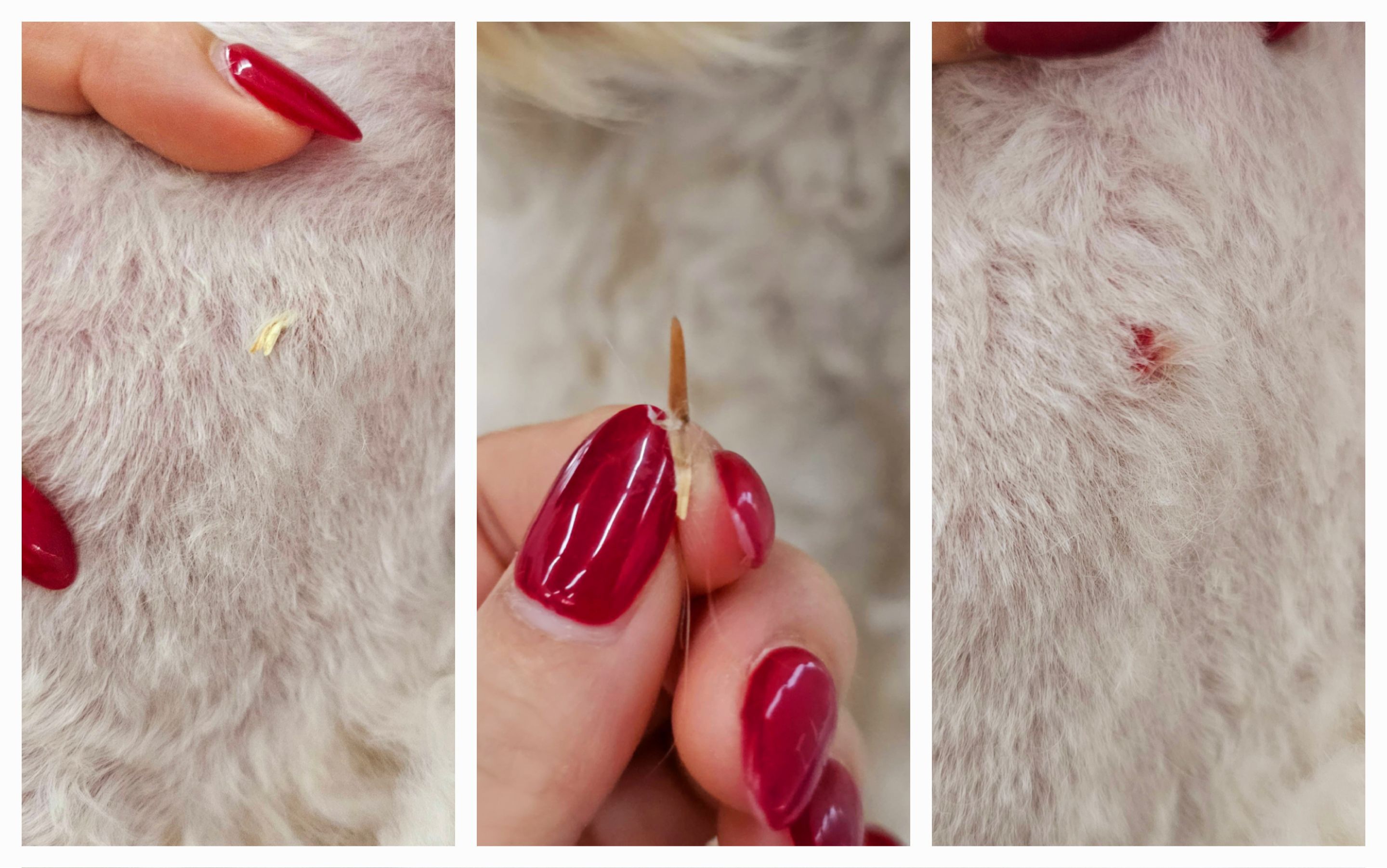
As an animal science student, I’m fascinated by the intricate ways that seemingly harmless environmental factors can impact animal health. One such factor that’s particularly relevant to us here in Canberra is the prevalence of foxtail grass seeds ( Hordeum murinum). These grasses flourish in our region’s warm, dry climate, posing a significant risk to dogs, especially during the peak summer months.
Why Are Foxtails So Problematic?

Foxtail grass seeds have a unique structure that makes them incredibly troublesome. Imagine a tiny spear with backward-facing barbs. This design allows them to easily penetrate a dog’s fur and skin, but those barbs prevent them from backing out. This can lead to a cascade of issues:
- Migration: Foxtails don’t just stay put. They can migrate through tissues, propelled by muscle movements and the dog’s own activity. This can lead to them reaching vital organs and body cavities.
- Inflammation and Infection: The presence of a foxtail triggers a foreign body reaction – the body tries to fight it off, leading to inflammation, swelling, and potential abscess formation. Foxtails can also carry bacteria and fungi, increasing the risk of infection.
Where Do Foxtail Grass Seeds Cause Trouble?

- Skin: Foxtails can embed in the skin anywhere on the body, causing localized infections and irritation.
- Paws: They commonly get lodged between the toes, making walking painful.
- Ears: Foxtails can work their way into the ear canal, causing inflammation and discomfort.
- Eyes: They can irritate the eyes, leading to redness, tearing, and even more serious complications if they penetrate the eyeball itself.
- Nose and Respiratory Tract: If inhaled, foxtails can cause sneezing, nasal discharge, and potentially even pneumonia.
Recognizing the Signs:
Foxtails can cause a wide range of symptoms depending on where they enter the body. Here’s how to connect the signs to potential foxtail issues:
Licking or Pawing:

- Skin: If your dog is excessively licking or pawing at a specific spot on their skin, it could indicate an embedded foxtail causing irritation or infection. You might even see a small bump, redness, or a draining tract.
- Paws: Constant licking or chewing between the toes, limping, or holding the paw up are common signs of a foxtail lodged in the paw.
- Ears: If your dog is shaking their head, scratching at their ears, or trying to paw at them, a foxtail might be the culprit.
- Eyes: Pawing at the eyes, squinting, or rubbing their face on the ground can indicate a foxtail irritating the eye.
Limping or Favouring a Limb:


- Paws: This is a classic sign of a foxtail embedded in the paw pad or between the toes. The foxtail causes pain and discomfort with every step.
- Legs/Body: In some cases, a migrating foxtail can even cause limping if it has embedded in a leg muscle or joint.
Head Shaking or Tilting:
Ears: A foxtail in the ear canal is extremely irritating, causing your dog to shake their head vigorously or tilt their head to try and dislodge it.
Sneezing, Coughing, or Nasal Discharge:
Nose/Respiratory Tract: If a foxtail is inhaled, it can get lodged in the nasal passages, causing sneezing, irritation, and discharge. If it travels further down, it can cause coughing and even difficulty breathing.
Redness or Swelling:
- Skin: Redness and swelling around the entry point are common signs of inflammation caused by a foxtail.
- Paws: The area between the toes or the paw pad itself may be swollen and red if a foxtail is present.
- Eyes: The conjunctiva (the pink tissue around the eye) may be red and inflamed.
Discharge from the Eyes or Ears:
- Eyes: A foxtail in the eye can cause watery or even pus-filled discharge.
- Ears: A foxtail in the ear canal can lead to a foul-smelling discharge.
Lethargy or Loss of Appetite:
Systemic: These general signs can indicate that your dog is feeling unwell, which could be due to pain, discomfort, or infection caused by a migrating foxtail.
Important Note: These signs can also be associated with other conditions, so it’s always best to consult a veterinarian for a proper diagnosis and treatment.
What Can We Do?
Prevention is key when it comes to foxtail grass seeds. Here are some strategies to protect your canine companion:
- Avoidance: Steer clear of areas with tall, dry grasses, especially during the summer months.
- Grooming: Regular brushing can help remove foxtails before they become embedded.
- Protective Gear: Consider using dog boots, especially if you’re venturing into areas where foxtails are prevalent.
- Yard Maintenance: Keep your yard free of overgrown grasses and weeds.
- Post-Walk Checks: Always examine your dog carefully after every walk, paying close attention to their paws, ears, and face.
If you suspect your dog has a foxtail, it’s crucial to seek veterinary attention promptly. Early diagnosis and intervention can prevent serious complications.
As someone passionate about animal welfare, I believe it’s essential to spread awareness about foxtail dangers. By understanding the risks and taking preventative measures, we can help keep our furry friends safe and healthy in Canberra.
____________________________________
Author: Kristy Zan
This article is based on knowledge from animal science studies and professional experience in puppy care and development. These resources are designed to complement the scientific knowledge provided in this article, offering a comprehensive approach to understanding and managing kennel cough in dogs.
Leave a Reply